
Last Updated on August 13, 2026 by Dr. Adam Veit

Orthodontic Retainers

A retainer holds your teeth in their new positions after braces come off. For several months after treatment, the bone and gums around each tooth are still firming up, so the teeth will drift back if nothing holds them. Wearing your retainer exactly as prescribed is what protects the result you just spent a year or two earning.

Retainers are the least glamorous part of orthodontics and the part that decides whether the work lasts. We would rather be honest about that than let anyone find out the hard way.

How Long Do You Wear a Retainer?

Full time at first, then nights, then nights for the long term.

The first stretch after your braces come off is when teeth move most easily, so we ask for the most wear then. As things stabilize, we step you down to sleeping in them. After that, most patients keep wearing a retainer at night indefinitely, a few nights a week at minimum.

That last part surprises people, so here is the reason. Teeth continue to move slowly throughout life, with or without braces. This is not a flaw in your treatment, and it is not unique to you. A retainer worn at night is a small habit that keeps a permanent result permanent, and Dr. Veit will give you a wear schedule built for your case.

Hawley Retainer

Hawley retainers use a wire across the front of the teeth on an acrylic body. They are more visible and more robust, they can be adjusted, and they last a long time when looked after.

Clear Retainer

Clear removable retainers are the most common. They are made of a thin, clear thermoplastic that fits over the teeth, they are hard to see, and they come out for eating and brushing. They are also the easiest to lose, which is most of what this page is about.

Fixed (Bonded) Retainers
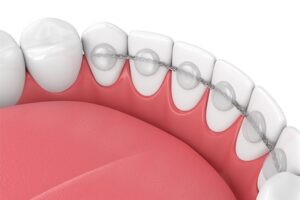
Bonded retainers are a thin wire fixed to the back of the teeth, usually the lower front ones. They work without you having to remember anything, which is their whole advantage. They are not permanent, though the name suggests it. A bonded wire can break or come away from a tooth, especially if you are rough with it, so it needs checking.

Many patients end up with a combination: a bonded wire on the lower teeth and a removable retainer on top. Dr. Adam Veit will recommend what suits your case at the appointment where the braces come off.

Caring for Your Retainer

Retainers are made of a thermoplastic that is sensitive to heat. Keep yours away from heaters, dishwashers, car dashboards and anywhere that gets above about 115 degrees, or it will warp and stop fitting.

  • Clean it before and after it goes in your mouth. The material is slightly porous, so plaque clings to it. Gentle scrubbing with a toothbrush and toothpaste removes it.
  • Never boil a retainer or run it under hot water.
  • Brush your teeth with the retainer out, not in.
  • Denture cleaners and mouthwash soaks are not a substitute for brushing it.
  • Always put it in its case. Never in a napkin, and never loose in a pocket or a bag.

Things Worth Remembering During the Retainer Years

  • Do not fold it into a napkin or leave it on a restaurant table. Garbage cans do not make happy hunting grounds.
  • Take it out before swimming in a lake or the ocean. If it comes out, you are not getting it back.
  • It should be in your mouth at all times unless you are eating or brushing.
  • Bring your retainers to every check-up appointment.
  • If it does not fit, is broken, or has gone missing, call us. Do not wait for the next appointment and do not try to adjust it yourself.
  • If a bonded wire comes loose, keep the piece and bring it in so it can be rebonded.

Request an appointment at our Oshkosh, Fond du Lac, Ripon or Berlin office if something has happened to your retainer. A retainer that is sitting in a drawer because it no longer fits is the most common way a finished case quietly comes undone.

Frequently Asked Questions

Have questions about retainers? These answers can help you understand how to care for them and protect your smile.

They are excellent while they are intact and a problem when they are not. A wire can break or detach without the patient noticing, and teeth can shift behind it. They also make flossing harder, which matters over decades. That is why we check them at your appointments rather than fitting one and forgetting about it.

An old retainer that no longer fits should not be forced back in. Slight settling can sometimes be recovered, but a retainer is designed to hold teeth, not to move them. Bring it in and let us look. Pushing an ill-fitting retainer onto teeth that have moved can do real damage.

With a floss threader, the same tool used for flossing with braces. It takes an extra minute and it is worth learning properly, because the teeth behind a bonded wire are the easiest ones on the whole arch to neglect. Our braces and appliance care page shows the technique.

Replacements are not free, and they are much less expensive than repeating treatment. We do not publish a fee here because it depends on the type and the arch. Call your office and ask, or see orthodontic financing for how fees and insurance work generally.

Keep the Result You Earned

If your retainer has been in a drawer for a while, or it no longer fits, that is worth a phone call rather than a shrug.

Request an appointment at Bright Orthodontics in Oshkosh, Fond du Lac, Ripon or Berlin. To see how treatment gets to this point, read about braces.

Reviewed by Dr. Adam J. Veit, DDS, MS, a board-certified orthodontist and the treating doctor at all four Bright Orthodontics offices.